







The Cost of a Bad Hire: How to Avoid Expensive Hiring Mistakes
The resume checked every box—relevant experience, strong skills, and an impressive background. The interviews went well, and the candidate seemed like the ideal fit. But within a few months, cracks began to appear. Deadlines were missed, collaboration suffered, and productivity declined. What once looked like a smart hiring decision quickly turned into a costly mistake.
This situation is more common than many organizations admit. A bad hire doesn’t just affect performance—it impacts team morale, company culture, and overall business outcomes. In a competitive and fast-paced hiring environment, making the wrong hiring decision can be expensive. This article explores the true cost of a bad hire and how businesses can avoid these mistakes with smarter strategies.
Understanding the True Cost of a Bad Hire
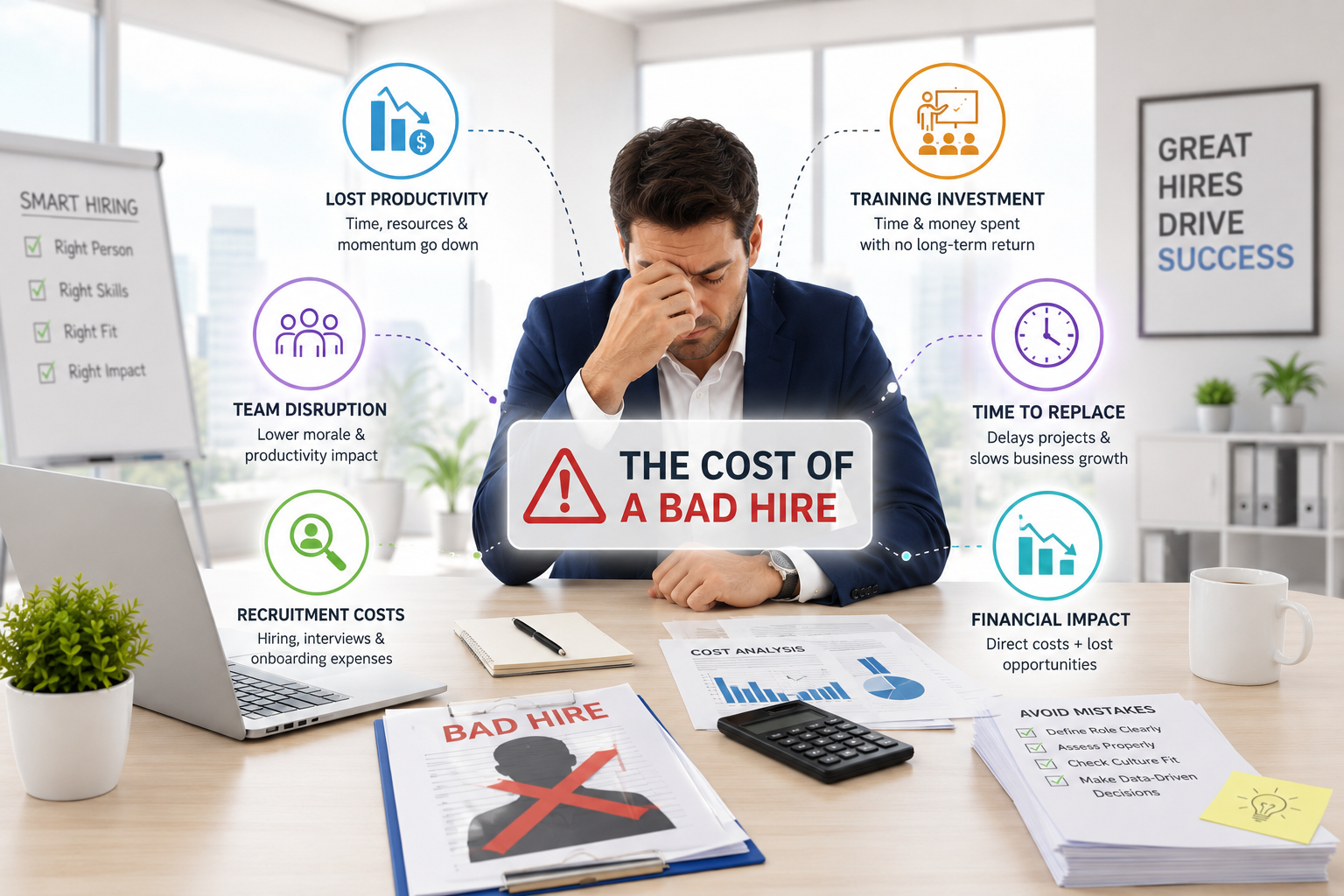
The cost of a bad hire goes far beyond salary. While financial loss is the most visible impact, the hidden costs can be even more damaging. These include lost productivity, decreased team efficiency, and the time spent rehiring and retraining.
When a wrong hire disrupts team dynamics, it can lower overall morale and affect the performance of other employees. Managers also spend additional time addressing performance issues instead of focusing on strategic goals. In some cases, it can even impact client relationships and business reputation.
Understanding these layered costs highlights why hiring decisions must be approached with precision and care.
Common Hiring Mistakes to Avoid
Many hiring errors stem from avoidable mistakes in the recruitment process. Here are some of the most common ones:
- Rushing the hiring process to fill positions quickly
- Focusing only on technical skills while ignoring cultural fit
- Unclear job descriptions leading to mismatched expectations
- Inadequate screening and assessment
- Bias in decision-making during interviews
- Ignoring reference checks or background verification
- Overvaluing resumes over real capabilities
These mistakes can lead to poor hiring decisions, even when candidates appear qualified on paper.
How to Avoid Expensive Hiring Mistakes
Preventing a bad hire requires a structured and strategic approach to recruitment. Organizations must focus on both skills and long-term fit.
Here are key strategies to improve hiring decisions:
- Define clear job roles: Set expectations and responsibilities upfront
- Use structured interviews: Standardize questions and evaluation criteria
- Assess both skills and behavior: Evaluate technical ability and cultural fit
- Leverage data and tools: Use assessments and analytics for better decisions
- Involve multiple stakeholders: Gain diverse perspectives during hiring
- Partner with recruitment experts: Access specialized talent and insights
- Conduct thorough reference checks: Validate candidate background
A well-defined hiring process reduces risk and increases the chances of selecting the right candidate.
The Role of Recruitment Strategy in Business Success
Hiring is no longer just an HR function—it’s a strategic business decision. Companies that invest in strong recruitment processes are more likely to build high-performing teams and achieve long-term success.
A well-planned recruitment strategy ensures that candidates are evaluated holistically, considering both immediate role requirements and future potential. It also improves efficiency by reducing time-to-hire and minimizing costly mistakes.
Organizations that prioritize quality over speed in hiring often see better retention, stronger team performance, and improved overall outcomes.
Future Trends in Smarter Hiring
As hiring evolves, companies are adopting more advanced and data-driven approaches to reduce hiring risks. AI-powered tools are being used to screen candidates, analyze patterns, and predict job performance.
Skills-based hiring is also gaining importance, with organizations focusing more on practical abilities than traditional qualifications. Additionally, there is a growing emphasis on candidate experience, ensuring a smooth and transparent hiring process.
These trends highlight a shift toward more informed and strategic hiring decisions, helping businesses avoid costly mistakes in the future.
Conclusion: Hiring Right Is Investing in Success
A bad hire can be expensive, but it is also preventable. By understanding the true cost, avoiding common mistakes, and implementing effective hiring strategies, organizations can significantly improve their recruitment outcomes.
“The cost of hiring the wrong person is far greater than the cost of waiting for the right one.”
Taking the time to hire right is not a delay—it’s an investment in long-term success. Build your hiring process with intention, and the results will follow.
