





Hiring for Soft Skills: Why They Matter More Than Ever
The resume was impressive—strong technical expertise, relevant experience, and a proven track record. The candidate cleared every technical round with ease. But once on the job, challenges began to surface. Communication gaps led to misunderstandings, teamwork suffered, and small issues turned into bigger problems. Despite having the right technical skills, something essential was missing.
This is a growing reality in today’s workplace. As businesses become more collaborative, fast-paced, and dynamic, soft skills are no longer optional—they are critical. Companies are now prioritizing how candidates work, communicate, and adapt, not just what they know. In this article, we explore why soft skills matter more than ever and how organizations can effectively hire for them.
Understanding the Shift Toward Soft Skills
The modern workplace has evolved significantly, especially with the rise of remote work, cross-functional teams, and global collaboration. Technical skills may help employees perform tasks, but soft skills determine how effectively they work with others and handle challenges.
Employers are increasingly recognizing that skills like communication, adaptability, and emotional intelligence directly impact productivity and workplace culture. In many cases, these skills are the difference between a good employee and a great one.
As roles become more dynamic, the ability to learn, collaborate, and navigate change is becoming just as important—if not more—than technical expertise.
Key Soft Skills Employers Look For
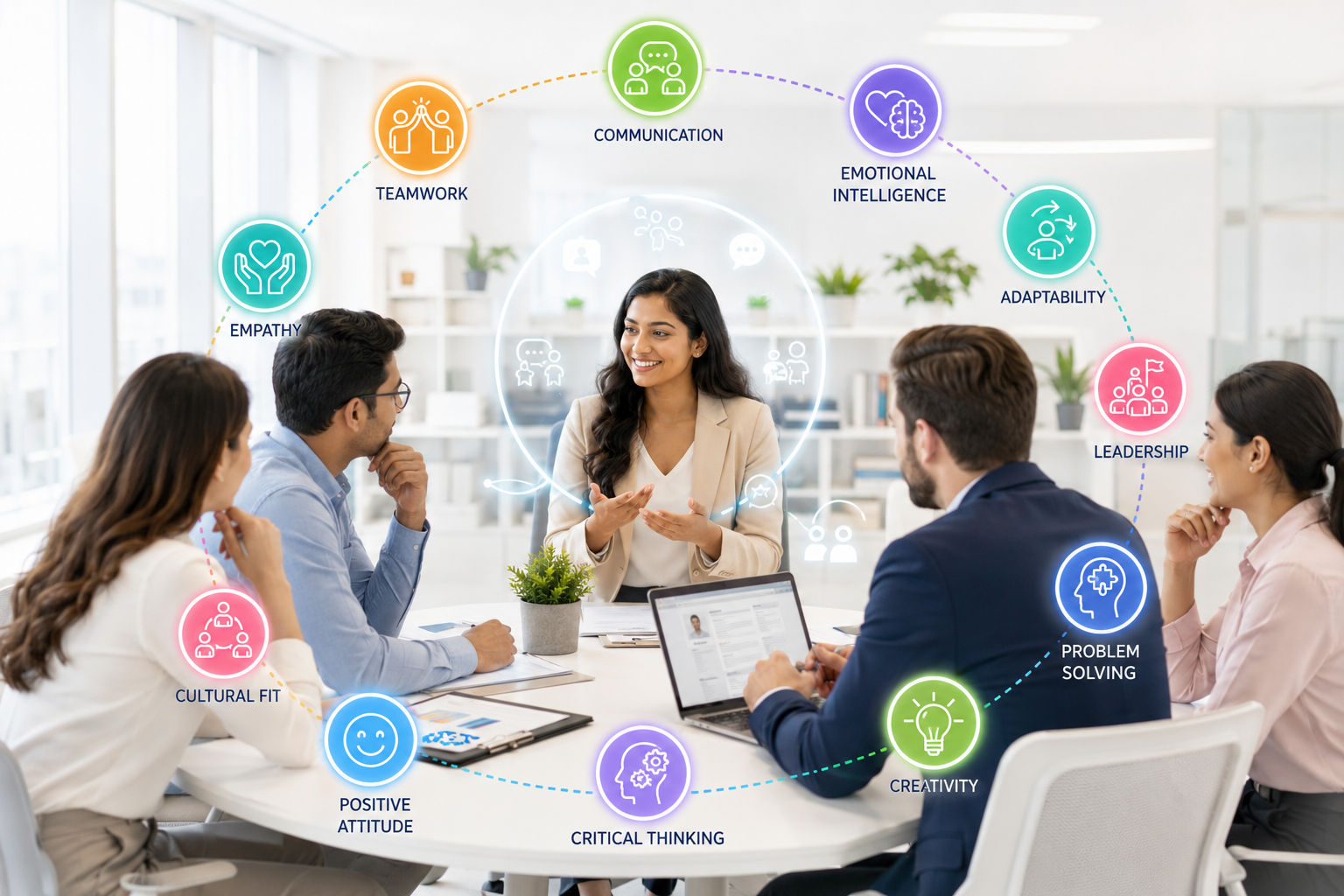
Organizations are actively seeking candidates who bring strong interpersonal and behavioral skills to the table. Here are the most in-demand soft skills:
- Communication: Clear and effective exchange of ideas
- Adaptability: Ability to adjust to change and new challenges
- Problem-solving: Thinking critically to find solutions
- Emotional intelligence: Understanding and managing emotions
- Teamwork: Collaborating effectively with diverse teams
- Time management: Prioritizing tasks and meeting deadlines
- Leadership potential: Taking initiative and guiding others
These skills enable employees to work efficiently, build relationships, and contribute to a positive work environment.
How to Assess Soft Skills During Hiring
Hiring for soft skills requires a different approach than evaluating technical abilities. Organizations must focus on behavior, communication style, and real-world responses.
Here are effective ways to assess soft skills:
- Behavioral interview questions: Ask candidates to share real experiences
- Situational scenarios: Evaluate how they handle challenges
- Group discussions or tasks: Observe teamwork and collaboration
- Communication evaluation: Assess clarity and confidence
- Reference checks: Gain insights into past behavior
- Structured interviews: Ensure consistency in evaluation
These methods help recruiters go beyond resumes and understand how candidates will perform in real work environments.
The Impact of Soft Skills on Business Success
Soft skills play a crucial role in shaping team dynamics, productivity, and overall business performance. Employees with strong interpersonal skills contribute to better collaboration, improved problem-solving, and a healthier workplace culture.
Organizations that prioritize soft skills often experience higher employee engagement and retention. Teams communicate more effectively, conflicts are resolved faster, and innovation thrives in an environment where ideas are openly shared.
In contrast, a lack of soft skills can lead to miscommunication, reduced efficiency, and workplace friction—ultimately affecting business outcomes.
Future Trends in Soft Skills Hiring
As workplaces continue to evolve, the importance of soft skills will only increase. Employers are now integrating soft skill assessments into their hiring processes and using technology to evaluate behavioral patterns.
There is also a growing focus on continuous development—companies are investing in training programs to help employees strengthen their soft skills over time. Additionally, remote and hybrid work models are making communication and self-management skills more critical than ever.
In the future, candidates who combine technical expertise with strong soft skills will have a clear advantage in the job market.
Conclusion: Building Teams That Truly Perform
Hiring for soft skills is no longer a preference—it’s a necessity. While technical skills may get the job done, soft skills determine how effectively it gets done.
“People will forget what you said, but they will never forget how you made them feel.”
By prioritizing soft skills in hiring, organizations can build stronger teams, foster better collaboration, and drive long-term success. The right balance of technical and interpersonal abilities is what truly defines high-performing professionals.
